I'm told there used to be a concept called the 'missionary barrel';
instead of throwing something away or giving it to Goodwill, you instead
sent it overseas for a missionary to sort out and use. Thankfully, that
concept has largely died, but it still holds true from time to time when
it comes to medical supplies -- send the expired stuff, the odd-sized
things, the rehabilitated or too antiquated equipment out to the field.
(Before I came, I was reading that Africa now has a waste disposal
problem because of the sheer number of antiquated or even
non-functioning computers that are sent out; apparently they contain
some kind of hazardous chemical inside which my 2 foot deep trash pit in
the backyard isn't quite adequate for.) Unfortunately, our patients and
doctors aren't particularly odd-sized (or expired for that matter!) so
we have an entire shelf in the storeroom full of size 9.0 and 5.5
surgical gloves! (that's really big and really small if you're non-medical)
We've been blessed with recent donations to cover the purchase of a
brand-new anesthesia machine for the hospital which will allow us to
give safe gas anesthesia to our patients at the hospital; saving us
money, providing for a safer anesthesia, and allowing us to treat
patients more effectively that we used to be able to. It's unusual that
something brand-new comes from donations and it got me stirred up again
about why we settle for less than the best when it comes to the work
that we are doing here. Don't get me wrong, we do our absolute best
with what we are provided with -- work extra hours, fill in the gaps,
trust in God to make up the difference -- but you get demoralized
because you know that your 100% effort is limited to say, 70%
effectiveness, because of the circumstances that are around you.
I was reading about the miracle at Cana and the fact that the wine that
Jesus made was 'the best wine'. Even though it would be 'wasted' on the
already drunk guests, it was still worthwhile to produce something that
would be the best to him. The difference between offering what could be
the best wine instead of watered down grape juice often lies outside of
myself and my control -- on the supplies from the government, the
donations of strangers -- and it's been really beautiful when the church
has recognized that responsibility and stepped up to fill the
difference. It's been one of the joys of being here to see that gap
slowly closed, little by little, with help from outside ourselves here.
It's very good when we can truly offer 'the best' to those who come
looking for our help.
Thursday, July 31, 2008


Sunday, July 27, 2008
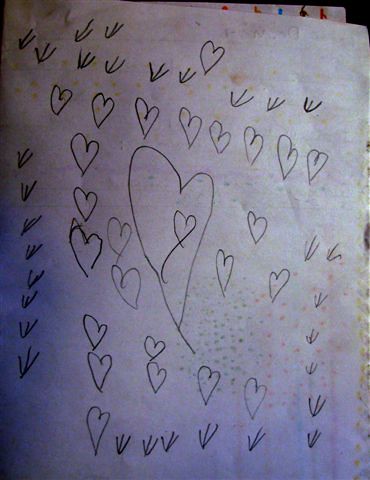
hearts and chicken feet

FROM MATT:
We had a gift from the academy this week as Hilary got the kids to draw
pictures for us and gave them to us at prayer meeting. Now in general,
I'm not a big kids' picture fan -- random scribblings don't inspire me
to clear off my refrigerator and proudly display them for everyone to
see. These were a bit more amusing than the usual run of the mill
cards, however, as the combination of memory verses, favorite pictures,
and words of encouragement didn't always match up so well....
So we've got the piranhas eating the smaller fish with the encouragement
to "be kind one to another" -- good advice there.
We've got "Dear Mr. Mat, how are you? are you fine? for all have
sinned and fall short of the glory of God" (that particular verse was
very popular for almost everyone, trying to keep us humble I bet.)
We've got "Thank you for coming, even young mens will fall" -- that was
sent to the Schuberts, with three teenage boys.
So maybe I'll keep these on display for a little while longer than average.
Friday, July 25, 2008
It's time for a field trip!
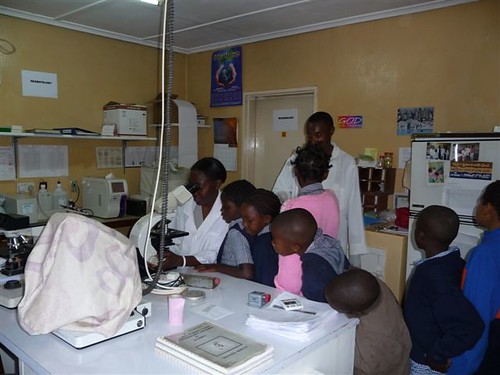
Hilary: More kudos to the staff at Mukinge Hospital for
allowing us to bring the children for a “career day” field trip to the
hospital! Mabel and I walked the dusty half mile to the hospital with
our grades 3-5 students for a series of short presentations on the
different kinds of jobs found in the medical facility. Special thanks go to Dr. Edgar
Mutimushi, a Zambian physician who reminded the kids about the
importance of studying hard and showed the kids how to use a stethoscope; nurse James
Mesa, who has a winning smile and informed the kids that interior qualities
such as being kind and having a compassionate heart are important parts of
being a nurse; lab technician Paddy Chandalala who amazingly welcomed us into
the lab and let the kids look at slides through a microscope, many if not all
of them for the first time; and radiographer Kamfunte Kanyama who beautifully
explained what she does and brought along a sample X-ray for the kids to look at
firsthand.
In addition, Mr. Tantula invited us into the physiotherapy department
for a brief tour, and Uncle Gilbert explained what goes on in the outpatient
department. We also had the opportunity to walk by the pharmacy, tailor
shop, kitchen, optic shop, and nurses’ training college. Yippee for field
trips!
MHA Annual Concert and Sports Day
The annual Concert and Sports Day at Mukinge Hill Academy held last Saturday, 19th July was a success, in my humble opinion. "Concert" is perhaps a strong term, although this is the official title given to the event; the kids sang songs complete with plenty of body movement, recited poems and memory verses from the Bible, and acted out a play based on the story of Joseph and his brothers from the Old Testament (see picture posted last Sunday). The sports part of the day included running races, potato sack races, wheelbarrow races (plenty of crashes in this one), three legged races, long distance races (twice around the perimeter of the school grounds), and a long distance race for the children's mothers (somehow this race ended up being significantly shorter than the long distance race for the kids :-)). I think we had around 70 parents and community members in attendance in addition to all our students; it was great to see the local community including lots of staff members from Mukinge Hospital supporting what's going on at the academy.
Sunday, July 20, 2008
the namesake, part II

I got a chance to meet the baby named after me last weekend when we went
out to visit my host family from the village. I don't really know why I
enjoy the fact so much that there's another kid running around out there
with my name -- it's not exactly as if Matthew is an uncommon name --
but it still makes me smile. As you can see from the picture here, he's
off to a healthy (read: fat) start! As we do more of our malnutrition
outreach, I'm grateful for the kids that do at least start out fat --
they've got a leg up on the rocky road of subsistence farming ahead of them.

Friday, July 18, 2008
Three kinds of English
Theoretically the schoolkids, Mabel, and I all speak English, but the number of differences between Irish-, Zambian- and American-English have been pretty amazing. From Mabel I've learned that rubbers are erasers, wool is yarn, lollipop sticks mean popsicle sticks, joined up writing is the same as cursive writing, and that anorak is a preferred term for jacket. Apparently people often refer to children as "pets" in Ireland; the schoolkids seemed to think Mabel was a "wee bit" funny for calling them animals in the beginning but they seem to have become accustomed to it.
For the first few hours in the school I thought I was having an easier time understanding the children than I was listening to Mabel until one of our young ladies asked, "Auntie Hilary, may I go to the room?" Now, we have two small rooms connected to the back of the classroom which we sometimes use for small group instruction, plus a few of the grade 3 students travel back and forth between our classroom and the grade 1 classroom since we're a little short on desk space, so I wasn't entirely sure which room this child wanted to go to. "The room?" I queried. "Yes, auntie, may I go to the room?" "Which room?" I asked. The somewhat frustrated child then quietly informed me, "Auntie, I need to go to the toilet." Ah yes, the roo m.
Lately I've started teaching the kids and Mabel how to say short phrases in Spanish. Maybe we'll all be able to understand each other soon :-). Hasta la vista, Hilary
Multiplication mission
Mathematics, or "maths" as people in Zambia refer to the subject, seems to be a bit of a challenge for many people in the country. One of the expatriate nurses shared with me that many of the Zambian nurses struggle with mathematical concepts, and this has caused some difficulty when it comes to administering the proper dosage of medication and other job responsibilities. In the classroom it's been frustrating watching the children calculate problems like "24 x 4" as "24 + 24 + 24 + 24" when they're supposed to be practicing their multiplication skills. It seems like they never learned their multiplication times tables, or at least the information never really sank in. So we have now embarked upon a "multiplication mission" for the next few weeks, focusing on memorizing the times tables. Many educators and others in the United States say that it's not necessary to spend much time memorizing mathematical facts since we have such tremendous access to technology, but I haven't seen a single calculator in our classroom and am fairly certain that most of the kids aren't using one at home, let alone other more advanced forms of technology. Plus, it seems to me that medical staff and other professionals don't exactly have time in the middle of a busy workday to find a calculator or a cell phone to determine the answer to a simple ma thematical problem. So, everyone, nine times four equals …? Mathematically yours, Hilary
Monday, July 14, 2008
Zambian schoolhouse
Hi, everyone! For those of you who are regular or occasional readers of Matt's "Notes from the bush" blog and may not know me, I'm a friend of Matt's and fellow parishioner from Colorado who's working at Mukinge Hill Academy about half a mile down the road from Mukinge Hospital for the next few weeks. Matt agreed to have me as a "guest blogger" for the time that I'll be here, so hopefully this will give everyone a grander perspective on what life in this part of Zambia is like.
Mukinge Hill Academy hosts about 70 students in grades 1-5 (British system of education), and many of the staff members at Matt's hospital choose to send their children to this academy. There are two classrooms in the building, with grade 1 in the first classroom and grades 3-5 in the other, while the grade 2 students and teacher meet in a room at the church across the road. At this current point in time, the regular headmistress/grades 3-5 teacher is on "home assignment" in the United Kingdom, so a lovely woman named Mabel from Ireland, myself until the end of this current school term, and the regular Zambian classroom assistants are handling affairs until Janet returns. I'm working mostly with the older children although we do combine all the students for some activities such as preparing for an upcoming concert/sports day.
Mukinge Hill Academy hosts about 70 students in grades 1-5 (British system of education), and many of the staff members at Matt's hospital choose to send their children to this academy. There are two classrooms in the building, with grade 1 in the first classroom and grades 3-5 in the other, while the grade 2 students and teacher meet in a room at the church across the road. At this current point in time, the regular headmistress/grades 3-5 teacher is on "home assignment" in the United Kingdom, so a lovely woman named Mabel from Ireland, myself until the end of this current school term, and the regular Zambian classroom assistants are handling affairs until Janet returns. I'm working mostly with the older children although we do combine all the students for some activities such as preparing for an upcoming concert/sports day.
I had seen the school last year when Tay and I had visited Matt during the summer of 2007, but working in it definitely provides a different experience. I'm still in the process of learning the children's names; David, Victor, and Success have been easy enough to pronounce and spell, but Chikumbutso, Kameya, and Kaumba make me think a little more. I had taught for several years in southern California before moving to Colorado a few years ago to begin a PhD program in education at the University of Denver and thought I'd seen a variety of educational arrangements in schools, but the format at Mukinge Hill Academy is new for me. The day normally begins around 7:45 am (the actual start time depends on when the keys arrive and with whom :-)), and the children typically begin working on individual workbooks in the areas of English, math, science, social studies, and word building. The students are basically using a home school curriculum, as it has been difficult to find teachers to serve in this part of Zambia and it was decided many years ago that a curriculum which encouraged students to function independently would be a good approach.
Anyway, the schedule itself is not terribly complicated: the students bring their goal sheets to Mabel and me at the beginning of the day for a checkover, spend most of the morning engaged with their workbooks, individually check in with me, Mabel, and the other assistants in the room as they finish each assignment, and take tests when they come to the end of a particular academic unit which Mabel and I then grade that same day. The students have an early-morning break, then continue the process of working on their individual assignments along with the continual checking and grading, have a late-morning break, then do something like art, religious education, or PE in the early afternoon until the end of the school day. There are other breaks during the week for assemblies and Kikaonde (language) lessons and occasional field trips, but that's the general idea.
Anyone who has ever worked with children knows that kids are an endless source of entertainment and creativity, and the children in Zambia are certainly no exception. For our art session on Friday, I told the kids that we were going to make friendship bracelets as do many children in the United States. The idea was to make a simple bracelet with two plastic "charms" or beads on it, but in no time the kids had moved on to friendship necklaces and triple wrap bracelets, along with extras to give to family members. It's all about sharing the love :-). We spent the afternoon practicing relay races, potato sack races, and three-legged races for the upcoming sports day and concert (more on this in the near future). Lots of love to all, Hilary Burg (aka "Auntie Hilary," as the children call me :-))
Saturday, July 12, 2008
Guest Blogger
Hi there everyone -- for the next month or so, there will be some guest
blogging from Hilary Burg about life in the local elementary school,
Mukinge Hill Academy, where she's working for the month of July. So you
can check out blogs about about the local education scene as well!
We'll try to be fairly obvious about who's doing the blogging....
blogging from Hilary Burg about life in the local elementary school,
Mukinge Hill Academy, where she's working for the month of July. So you
can check out blogs about about the local education scene as well!
We'll try to be fairly obvious about who's doing the blogging....
Monday, July 07, 2008
4th of July, Zambia style
We celebrated July 4th this week along with the rest of you in America.
It's a pleasure to be able to get back to my boyhood days of playing
with dangerous fireworks. Firework season is in December in preparation
for New Years', so it's slim pickings these days. However, I've become
more resourceful after 18 months here, so I got my chess playing contact
from the BOMA to rustle around in the shop where he works and he
uncovered two stacks of fireworks buried beneath the cartons of mchuzi
mix and Colgate toothpaste. Zambia fireworks inspire even more
nervousness that the ones I remember from childhood that would chase you
around the yard emitting green sparks: the two cartons of fireworks that
we could find had a fuse that was about 2mm long (okay, maybe that's an
exaggeration -- it was really 1mm) and were shaped suspiciously like
bullets wrapped in paper. Not knowing exactly what to expect, we found
a fairly long stick with a live coal on the end from our bonfire and had
a go -- and were rewarded with a very satisfying amount of explosion and
flashing lights shooting up into the nearby tree. Despite the fact that
we've had no rain since April, there was not even one extra fire. And
nobody's eye got put out, so I guess we met the definition of 'fun and
games'.
It's a pleasure to be able to get back to my boyhood days of playing
with dangerous fireworks. Firework season is in December in preparation
for New Years', so it's slim pickings these days. However, I've become
more resourceful after 18 months here, so I got my chess playing contact
from the BOMA to rustle around in the shop where he works and he
uncovered two stacks of fireworks buried beneath the cartons of mchuzi
mix and Colgate toothpaste. Zambia fireworks inspire even more
nervousness that the ones I remember from childhood that would chase you
around the yard emitting green sparks: the two cartons of fireworks that
we could find had a fuse that was about 2mm long (okay, maybe that's an
exaggeration -- it was really 1mm) and were shaped suspiciously like
bullets wrapped in paper. Not knowing exactly what to expect, we found
a fairly long stick with a live coal on the end from our bonfire and had
a go -- and were rewarded with a very satisfying amount of explosion and
flashing lights shooting up into the nearby tree. Despite the fact that
we've had no rain since April, there was not even one extra fire. And
nobody's eye got put out, so I guess we met the definition of 'fun and
games'.
snake attack
Probably the number one question that I get asked by people interested
in coming to visit is "what about the snakes". I've had some close
encounters with snakes since I've been here -- the time I went to the
pool to find a 6-7 foot spitting cobra swimming in the deep end; the
time I was riding my motor bike and a HUGE snake appeared out of the
grass about 10 yards in front of me -- its head had disappeared in the
grass on one side of the road before the tail appeared on the other
side; the four snakes I found on my doorstep in two weeks last
December. Remarkably, though, even if you get bitten, most people do
pretty well -- they get a big huge swollen leg that takes about a month
to go away, but there's not a lot of lasting damage.
in coming to visit is "what about the snakes". I've had some close
encounters with snakes since I've been here -- the time I went to the
pool to find a 6-7 foot spitting cobra swimming in the deep end; the
time I was riding my motor bike and a HUGE snake appeared out of the
grass about 10 yards in front of me -- its head had disappeared in the
grass on one side of the road before the tail appeared on the other
side; the four snakes I found on my doorstep in two weeks last
December. Remarkably, though, even if you get bitten, most people do
pretty well -- they get a big huge swollen leg that takes about a month
to go away, but there's not a lot of lasting damage.
Issues of expired drugs, unfamiliar diagnoses, and fatal diseases come
up routinely in the hospital and are part of what makes the medicine
here so challenging. This past week, we had the first severe case of
snake bite I've seen in the hospital -- a guy who was bitten 24 hours
previously and sent from one of our referring hospitals. Usually with
these severe cases of neuro toxins you expect them to die within just a
few minutes; why this man had such a delayed presentation I don't really
know (it was a 'green snake with a black head' -- more descriptive than
the usual at least, if someone wants to take a stab at identifying it).
But when he arrived at the hospital he was barely breathing and the
muscles all over his body were twitching uncontrollably. He was rapidly
accumulating fluid in his lungs because his muscles were so weak, and I
knew we didn't have much time.
Unfortunately, time was not the only thing in short supply; we have very
little snake anti-venom in the hospital, because it's expensive for us
to stock. Usually to treat a severe case of snakebite you need around
10-15 vials of anti-venom. I knew we had a hidden stash in the bottom
of the pharmacy refrigerator -- it was expired from 2004, but I had
resisted throwing it away in the hopes that it could still be useful.
Anti-venom is made from horses serum, and can be potentially dangerous
or even fatal to give if the horse serum reacts with your body. So I'm
contemplating giving a potentially dangerous drug which when it's good
can be trouble -- my batch, though, was 4 years out of date and slippery
from the mold from the bottom of the refrigerator. I've never given
this drug, or even seen anyone give it to a patient. And there's always
the chance that my diagnosis of neurotoxic snake bite could be wrong as
well, since I've never seen one of those, either.
I was surprised by our pharmacist, who reported that we had 18 of these
expired vials, about 10 more than I remembered having on hand. The man
was clearly dying, so I called in the other docs who agreed with me and
we started with 8 vials. They helped a little bit, but he was still
twitching like an electrocuted fish, so we ended up continuing to give
and give extra vials, nervously noting his wheezing with some of the
doses as he reacted to the medicine he was given. At vial #16, his
twitching finally stopped, and we ended up giving the full 18 vials to
him to make sure his symptoms didn't come back.
The next day, he's sitting up in bed, smiling, and saying he's feeling
much better! And he went home the next day after that with a slightly
swollen leg but not much the worse for wear. He also met with the
chaplains and decided to dedicate his life to God on the day he was
discharged. I can't help but think that it was unusual for him to take
24 hours to develop symptoms, to arrive at the hospital at just the
right time (an hour later he would likely have been dead), to need 18
vials to get better which just happened to be the amount that we had,
left over from some order back in 2002 or 2003, and that maybe there had
been a plan for him made a long time ago that was difficult to see until
he came.
babies in the grass
I had my first opportunity to deliver a baby on the side of the road
about a week ago -- this is an opportunity that everyone who works at
the hospital seems to get to enjoy at some point during their stay. I
was sitting in the maternity ward when the phone call from the girls
school came, saying someone was giving birth on the side of the road
about a kilometer away. The maternity nurse and I looked at each other,
and I offered to drive her out to the place on the back of my scooter,
so we hopped on board and zoomed at 20 kph down our rutted, dusty road
to the place where she was supposed to be. We found her sitting up in
the grass with a blanket pulled over her head and the baby on the dirt
at her feet. At this point, a small crowd had gathered, and I think she
was pretty embarrassed, so she wouldn't answer us or look out from
underneath the sheet. So we recruited about 7 women who had gathered
around to make a barrier by spreading out their skirts (the outer skirt,
not the inner one -- this isn't one of those risque stories) like a
fabric wall, at which point the young mother peeped out from underneath
her blanket and we were able to get the baby and her cleaned up. She
even agreed to be taken back to the hospital to sew up some small tears
(on the back of the motorbike, mind you -- people have to be tough here
to sit on the back of a motorcycle 20 minutes after giving birth)!
about a week ago -- this is an opportunity that everyone who works at
the hospital seems to get to enjoy at some point during their stay. I
was sitting in the maternity ward when the phone call from the girls
school came, saying someone was giving birth on the side of the road
about a kilometer away. The maternity nurse and I looked at each other,
and I offered to drive her out to the place on the back of my scooter,
so we hopped on board and zoomed at 20 kph down our rutted, dusty road
to the place where she was supposed to be. We found her sitting up in
the grass with a blanket pulled over her head and the baby on the dirt
at her feet. At this point, a small crowd had gathered, and I think she
was pretty embarrassed, so she wouldn't answer us or look out from
underneath the sheet. So we recruited about 7 women who had gathered
around to make a barrier by spreading out their skirts (the outer skirt,
not the inner one -- this isn't one of those risque stories) like a
fabric wall, at which point the young mother peeped out from underneath
her blanket and we were able to get the baby and her cleaned up. She
even agreed to be taken back to the hospital to sew up some small tears
(on the back of the motorbike, mind you -- people have to be tough here
to sit on the back of a motorcycle 20 minutes after giving birth)!
Fortunately, everyone did well and went home the next day.
Wednesday, July 02, 2008
the english cut
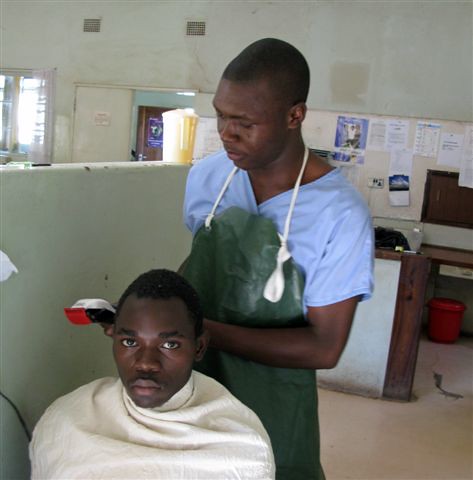
There's too many puns to be made on 'the first cut', but suffice it to
say that after mom and dad brought me a pair of electric clippers one of
the fun things we've been doing is offering free haircuts to the men on
male ward while they are in the hospital. I thought that maybe we'd get
one or two guys who wanted to get a shave, but it never fails that when
we do it the entire ward files up for a haircut and we're surrounded
with piles of curly hair next to the laundry lines outside. Usually I
leave the job to our capable ward assistants (Mr. Bazelel Munguya
pictured here) but I had a go at it today. The first person asked me
for an 'english cut', which I later found out was not to be confused
with an 'english bobee cut'. Actually, in my opinion pretty much any
haircut that I give is by definition an 'english cut', or at least a cut
in english. However, the actual english cut consists of shaving on the
sides and leaving it infinitesimally longer on the top (by about 1 mm
longer according to the clippers). I think I have a picture from
Livingstone last year that may illustrate the topic...coming next....
top right
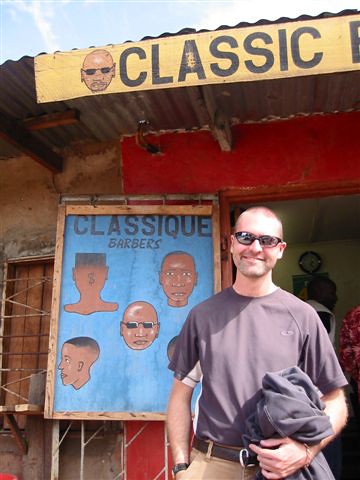
So I think the actual english cut would be the top right. Perhaps with
a little practice I can manage the '$' in the back of the hair soon,
though?
Monday, June 16, 2008
the namesake
Got to meet my first baby named after me last week -- a lady I did a
C-section on about a month ago. Unfortunately, I couldn't find my
camera and she was headed back to the village, so there's no pictures,
but you can rest assured that he was very handsome at one month. :) No
one names their babies before they are born -- or even for several days
afterwards, for that matter -- so there's some opportunity to make
suggestions if they are interested. We spend a lot of our call doing
obstetrics here; with the average family size around 7-9 people, you can
imagine how busy that can get at times. It's more fun when there's
these personal connections, though. Does anyone else want me to be
suggesting their names to potential mothers?
C-section on about a month ago. Unfortunately, I couldn't find my
camera and she was headed back to the village, so there's no pictures,
but you can rest assured that he was very handsome at one month. :) No
one names their babies before they are born -- or even for several days
afterwards, for that matter -- so there's some opportunity to make
suggestions if they are interested. We spend a lot of our call doing
obstetrics here; with the average family size around 7-9 people, you can
imagine how busy that can get at times. It's more fun when there's
these personal connections, though. Does anyone else want me to be
suggesting their names to potential mothers?
Tuesday, June 03, 2008
comfort zones
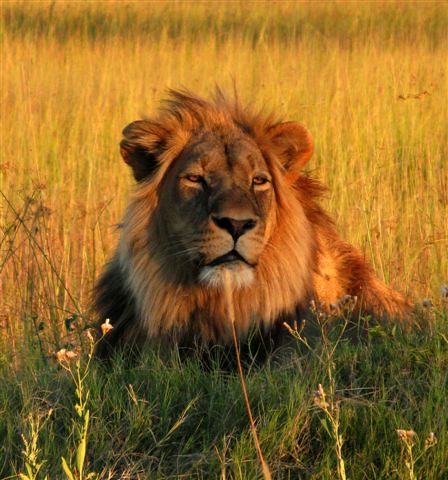
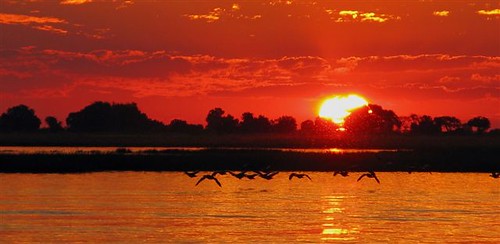
Hello to all! It's been too long since I've been in touch from Mukinge! I admit that I've been playing a little bit of hooky over the past few months as I took some time out to visit with my parents and see some beautiful animals in Botswana. Those times are really hard to express well in an email -- the scale is just too big to get across with pictures or words. There's a comfort, or peace, to put it better, in time spent looking into a red sunset with your family as the tower of giraffes gracefully graze in the distance.
I've found my role at the hospital changing a little bit over the past few months as I try to get involved more with the local communities doing education and mobile clinics. In April as the result of brainstorming with the district health nutritionist, our nurses on the malnutrition ward, and some of the doctors, we decided to put together a community-based malnutrition project aiming to address barriers to growing protein-rich foods, and then to provide seed for protein-rich foods like beans and peanuts to the families that successfully completed the educational part of the program. So far we've had a lot of interest from the local community and we have had close to 300 families sign up -- could be quite a challenge providing food for that many families come October! Right now, we still don't know where the funds will come from to provide seed for that many people, but we are confident that we will be able to provide. It's been a stretch for me to do something like that without having all my 'ducks in a row' before I get started, but I've been changing what I feel comfortable with in the knowledge that we will be cared for, like we've been cared for 50 years. I don't really like the phrase 'out of my comfort zone' -- it seems overused these days, and maybe not all that applicable to a place like Africa where the entire continent is sort of one big 'uncomfortable zone' as you face issues of malaria and overwork and problems with things like water and electricity. But I've consistently found that the places where I need to be working are often just a little bit outside what I think I 'should' be doing. Gracefully, I also find that when I arrive at those places, they are just the place where I am supposed to be.
Last week I substituted for our executive director, Mr. Fumpa, in the hospital's mobile eye clinic. I drove off for two days to what was perhaps the center of the dust universe to see people complaining of 'smoke' and 'darkness' in their vision. After two days of peering through dust and smoke myself (it's now burning season in Zambia, when they burn all the fields) I could sympathize well with them and their vision problems. These community experiences have been a change for what's comfortable for me as well -- doing work in the hospital -- as I face life without the comforts of electricity or running water or the comfort of people who can help translate for me if I'm getting stuck with my Kaonde. One of the things weighing on me as I begin to contemplate what will happen after I leave is the general discomfort of needing to leave the programs behind in the hands of the local people, who may or may not be able to carry on after I've left. I'm starting to face the reality of my leaving more and more and am doing my best to encourage and identify local people to provide the impetus that most of these programs will continue to need. So much of development aid these days is focused on 'sustainability', which is a concept that falls well short of the mark in places as poor as rural Zambia. You often need outside resources to overcome barriers like transportation and communication that we take for granted at home. I think what we need is 'sustained interest' from the rest of the world, which is perhaps a concept that's even trickier than sustainability.
There's a lot more going on the hospital that I could tell you about -- the fruits of some of the seeds that we planted last year are coming ripe: a new restaurant, a rehab of the admin block, the new nursing student dormitory, a HIV counseling center, internet access in the hospital, completing the construction of two more staff houses, beginning on our apartment complex, and so forth. We've seen some miraculous recoveries that have had the docs scratching their heads and wondering how that person pulled through. I have enjoyed seeing the basketball/tennis court put to good use almost every single day by the local youths and kids of the community -- makes the effort worth it. My current goal is to find an ice cream machine for our new restaurant (a person can dream, huh?). And as always at Mukinge, for every up there is a down -- this week we had a 14 year old boy die from cancer after traveling 4 days to get to the hospital. I had a 1 year old boy die under my hands while doing my eye clinics because there were no IV cannulas to transfuse the patients with severe malaria at the clinic where we were at. And despite our overall infrastructure progress we've continued to have issues -- the telephone system is down, the electrical transformer is about to go and causing electrical fluctuations which have caused the burnout of two water pumps, leaving us with a tenuous water supply. Funds that we've raised have lost value as the dollar becomes weaker and the price of oil continues to rise, making transport in the rural areas even more expensive.
You all have been so generous with your support, emails, and finances to the hospital while I've been here, and I wanted to say thank you once again. My current goals are to be finishing up around 6 months from now and spend some time in the states working and thinking about my future, so hopefully I can catch up with all come next Christmas season!
All the best,
Matt

I've found my role at the hospital changing a little bit over the past few months as I try to get involved more with the local communities doing education and mobile clinics. In April as the result of brainstorming with the district health nutritionist, our nurses on the malnutrition ward, and some of the doctors, we decided to put together a community-based malnutrition project aiming to address barriers to growing protein-rich foods, and then to provide seed for protein-rich foods like beans and peanuts to the families that successfully completed the educational part of the program. So far we've had a lot of interest from the local community and we have had close to 300 families sign up -- could be quite a challenge providing food for that many families come October! Right now, we still don't know where the funds will come from to provide seed for that many people, but we are confident that we will be able to provide. It's been a stretch for me to do something like that without having all my 'ducks in a row' before I get started, but I've been changing what I feel comfortable with in the knowledge that we will be cared for, like we've been cared for 50 years. I don't really like the phrase 'out of my comfort zone' -- it seems overused these days, and maybe not all that applicable to a place like Africa where the entire continent is sort of one big 'uncomfortable zone' as you face issues of malaria and overwork and problems with things like water and electricity. But I've consistently found that the places where I need to be working are often just a little bit outside what I think I 'should' be doing. Gracefully, I also find that when I arrive at those places, they are just the place where I am supposed to be.
Last week I substituted for our executive director, Mr. Fumpa, in the hospital's mobile eye clinic. I drove off for two days to what was perhaps the center of the dust universe to see people complaining of 'smoke' and 'darkness' in their vision. After two days of peering through dust and smoke myself (it's now burning season in Zambia, when they burn all the fields) I could sympathize well with them and their vision problems. These community experiences have been a change for what's comfortable for me as well -- doing work in the hospital -- as I face life without the comforts of electricity or running water or the comfort of people who can help translate for me if I'm getting stuck with my Kaonde. One of the things weighing on me as I begin to contemplate what will happen after I leave is the general discomfort of needing to leave the programs behind in the hands of the local people, who may or may not be able to carry on after I've left. I'm starting to face the reality of my leaving more and more and am doing my best to encourage and identify local people to provide the impetus that most of these programs will continue to need. So much of development aid these days is focused on 'sustainability', which is a concept that falls well short of the mark in places as poor as rural Zambia. You often need outside resources to overcome barriers like transportation and communication that we take for granted at home. I think what we need is 'sustained interest' from the rest of the world, which is perhaps a concept that's even trickier than sustainability.
There's a lot more going on the hospital that I could tell you about -- the fruits of some of the seeds that we planted last year are coming ripe: a new restaurant, a rehab of the admin block, the new nursing student dormitory, a HIV counseling center, internet access in the hospital, completing the construction of two more staff houses, beginning on our apartment complex, and so forth. We've seen some miraculous recoveries that have had the docs scratching their heads and wondering how that person pulled through. I have enjoyed seeing the basketball/tennis court put to good use almost every single day by the local youths and kids of the community -- makes the effort worth it. My current goal is to find an ice cream machine for our new restaurant (a person can dream, huh?). And as always at Mukinge, for every up there is a down -- this week we had a 14 year old boy die from cancer after traveling 4 days to get to the hospital. I had a 1 year old boy die under my hands while doing my eye clinics because there were no IV cannulas to transfuse the patients with severe malaria at the clinic where we were at. And despite our overall infrastructure progress we've continued to have issues -- the telephone system is down, the electrical transformer is about to go and causing electrical fluctuations which have caused the burnout of two water pumps, leaving us with a tenuous water supply. Funds that we've raised have lost value as the dollar becomes weaker and the price of oil continues to rise, making transport in the rural areas even more expensive.
You all have been so generous with your support, emails, and finances to the hospital while I've been here, and I wanted to say thank you once again. My current goals are to be finishing up around 6 months from now and spend some time in the states working and thinking about my future, so hopefully I can catch up with all come next Christmas season!
All the best,
Matt
the problem of pain
I was the substitute eye doctor last week as I covered for our executive
director when he got called away into town for a meeting. We ended up
seeing around 200 patients in the two days that we went out into the
community clinics, and most of the time there wasn't much help in
translating, so I was amazed at how 200 people could really pretty much
manage to sum up their complaints in about 5 ways: 1) my eyes hurt, 2)
my eyes feel like there is dust in them, 3) I can only see smoke and
blackness, 4) I can see far away but I get a headache when I read, and
5) People in the distance are blurry but when they get closer I can see
them okay. Maybe that was limited some by my language skills, but
honestly, that managed to sum up close to 190 patients (the other 10
were more fun -- my favorite was the 10 year old girl who was brought in
because she couldn't see when it was dark at night, but when they turned
the lights on she could see okay -- exactly what's the problem there?).
Most people when they present to the hospital don't even describe what's
wrong, they just name the body part -- ie "What's wrong?" "Eyes." (as
if I couldn't have guessed since they were coming to the EYE clinic).
Sometimes this gets pretty funny as you get a list of body parts from
some of the older patients, like learning anatomy: "How are you
today?" "Eyes, neck, chest, stomach, back, legs, arms, head." And when
you see them the next day, it's the same: "How are you feeling today?"
"Eyes." This can be frustrating when you're trying to work out whether
they feel better or worse.
It's funny that the vocabulary to express problems is so limited,
however. At home we're taught to elicit all the parts of someone's pain
-- is it stabbing? burning? like shocks? crampy? and so forth -- but
here there's really just one word for pain and it pretty much sums up
everything. Complaining is not so much of a right. I wonder if like
the Eskimos with their 82-odd words for snow if our vocabulary points
out our fixation on pain in the states, and also being pain-free, where
here the expectation is that pain is part of life, not something to be
dwelt upon.
director when he got called away into town for a meeting. We ended up
seeing around 200 patients in the two days that we went out into the
community clinics, and most of the time there wasn't much help in
translating, so I was amazed at how 200 people could really pretty much
manage to sum up their complaints in about 5 ways: 1) my eyes hurt, 2)
my eyes feel like there is dust in them, 3) I can only see smoke and
blackness, 4) I can see far away but I get a headache when I read, and
5) People in the distance are blurry but when they get closer I can see
them okay. Maybe that was limited some by my language skills, but
honestly, that managed to sum up close to 190 patients (the other 10
were more fun -- my favorite was the 10 year old girl who was brought in
because she couldn't see when it was dark at night, but when they turned
the lights on she could see okay -- exactly what's the problem there?).
Most people when they present to the hospital don't even describe what's
wrong, they just name the body part -- ie "What's wrong?" "Eyes." (as
if I couldn't have guessed since they were coming to the EYE clinic).
Sometimes this gets pretty funny as you get a list of body parts from
some of the older patients, like learning anatomy: "How are you
today?" "Eyes, neck, chest, stomach, back, legs, arms, head." And when
you see them the next day, it's the same: "How are you feeling today?"
"Eyes." This can be frustrating when you're trying to work out whether
they feel better or worse.
It's funny that the vocabulary to express problems is so limited,
however. At home we're taught to elicit all the parts of someone's pain
-- is it stabbing? burning? like shocks? crampy? and so forth -- but
here there's really just one word for pain and it pretty much sums up
everything. Complaining is not so much of a right. I wonder if like
the Eskimos with their 82-odd words for snow if our vocabulary points
out our fixation on pain in the states, and also being pain-free, where
here the expectation is that pain is part of life, not something to be
dwelt upon.
Monday, May 26, 2008
Bupe

Bupe means 'gift' in Kaonde, which is somewhat appropriate as she's now become quite adept at finding little gifts for herself from our soft-hearted staff on peds 2, the malnutrition ward. Bupe and her family have basically moved to Mukinge over the past year as they've spent more time in the hospital than at home; one of the difficulties with treating malnutrition is that the children often require 1-2 months in the hospital to get better, but then the family can't do the farming at home, so they don't plant their crops and the cycle continues.
Families like Bupe's are part of the reason that we're doing our community intervention to reach families at home, teach them about farming for protein-rich foods (beans and peanuts and soy beans) and hopefully break the cycle before they get to the hospital. We're moving forward -- we've got around 230 families so far, and hope to be able to provide seed for all those families in October.
Projects like this make me worried, although they are good, because of the amount of control that you have to turn over to the community and families and overworked hospital staff now and after I go as well. But the opportunity outweighs the risks, and we're hoping for some miraculous changes in the years to come!
Thursday, May 22, 2008

back again
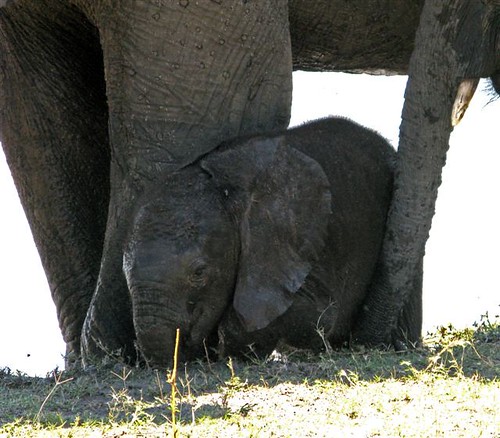
Blogging is bad when it's too introspective; I've had a hard time find
things worth blogging about the past few weeks after getting back from
vacation with my family. I've started thinking about where I'll be in
December and what life will look like after two years at Mukinge, but at
the same time I seem to find my responsibilities here continuing to
expand -- now spearheading our nutrition outreach, filling in for Jairos
in the mobile eye clinics, helping to orient pharmacists and lab
technicians, neither of which I have much of a clue about -- and so
forth. It's been a relief to have a full complement of doctors around
to take some of the burden of clinical work from me, but it's changed my
day-to-day routine quite a bit. Today and tomorrow we will go to the
villages to teach the community about nutrition, how to make a balanced
diet for their children, and suspend dozens of screaming children from
our scales as we monitor malnutrition in the various areas.
things worth blogging about the past few weeks after getting back from
vacation with my family. I've started thinking about where I'll be in
December and what life will look like after two years at Mukinge, but at
the same time I seem to find my responsibilities here continuing to
expand -- now spearheading our nutrition outreach, filling in for Jairos
in the mobile eye clinics, helping to orient pharmacists and lab
technicians, neither of which I have much of a clue about -- and so
forth. It's been a relief to have a full complement of doctors around
to take some of the burden of clinical work from me, but it's changed my
day-to-day routine quite a bit. Today and tomorrow we will go to the
villages to teach the community about nutrition, how to make a balanced
diet for their children, and suspend dozens of screaming children from
our scales as we monitor malnutrition in the various areas.
Thursday, April 24, 2008
traveling man
This month has been a little bit unusual for me as I take a little
detour from my usual duties of doctoring, seeing patients in the
hospital, doing surgeries, teaching, etc. I've spent most days this
month away from the inpatient duties as we've been going out into the
community to get the community buy-in for nutrition outreaches and
educational programs (more to come soon), I was doing the music for our
SIM retreat, and now am going to head off for a little break with my
folks down to Botswana. Tomorrow I'm off with our executive director to
visit one of our referral hospitals to examine some monetary issues and
get perspective on the medical care they give there. It's good to leave
the hospital because it gives perspective on why I'm working there, but
it always brings up some guilty feelings as you know the people who are
left behind have to work harder to cover for your absence. No decisions
get made in that independent vacuum that we like to fool ourselves into
thinking exists in America; we can do what we like and the only one it
affects is us. That's an unusual perspective compared to most of the
majority world and one that most Zambians have a hard time understanding.
detour from my usual duties of doctoring, seeing patients in the
hospital, doing surgeries, teaching, etc. I've spent most days this
month away from the inpatient duties as we've been going out into the
community to get the community buy-in for nutrition outreaches and
educational programs (more to come soon), I was doing the music for our
SIM retreat, and now am going to head off for a little break with my
folks down to Botswana. Tomorrow I'm off with our executive director to
visit one of our referral hospitals to examine some monetary issues and
get perspective on the medical care they give there. It's good to leave
the hospital because it gives perspective on why I'm working there, but
it always brings up some guilty feelings as you know the people who are
left behind have to work harder to cover for your absence. No decisions
get made in that independent vacuum that we like to fool ourselves into
thinking exists in America; we can do what we like and the only one it
affects is us. That's an unusual perspective compared to most of the
majority world and one that most Zambians have a hard time understanding.
Wednesday, April 09, 2008
Zamcowboys
Had an unexpected encounter with my visiting neighbor the other day who
styles himself as the 'only Zambian cowboy'. We were able to swap
horseback riding stories (me: trail riding experiences at camp, him:
working in a stable in Lusaka), compared cowboy boots, and discussed the
merits of straw versus felt cowboy hats (me: pro-straw hats in hot
climates; him: pro-felt hat durability). I have to say, I figured when
I came to Mukinge that I would encounter some different cultures, but I
fully did not expect to encounter Texan culture half a world away. He's
gone back to Lusaka now to finish his course in lab technology, at which
point I am completely sure he will be the only Zambian Cowboy Lab Tech
in the country.
styles himself as the 'only Zambian cowboy'. We were able to swap
horseback riding stories (me: trail riding experiences at camp, him:
working in a stable in Lusaka), compared cowboy boots, and discussed the
merits of straw versus felt cowboy hats (me: pro-straw hats in hot
climates; him: pro-felt hat durability). I have to say, I figured when
I came to Mukinge that I would encounter some different cultures, but I
fully did not expect to encounter Texan culture half a world away. He's
gone back to Lusaka now to finish his course in lab technology, at which
point I am completely sure he will be the only Zambian Cowboy Lab Tech
in the country.
Thursday, April 03, 2008
Mukinge...and one string
I was reading about and anecdote this week about Paganini giving a
concert where first one, then two, then three of his strings on his
violin broke. He reportedly finished the concert, and then played the
encore on the single remaining string.
Whether the story is true or not, it resonated with what we do here at
the hospital; despite no phones, our water coming and going and often
full of black sludge, intermittent electricity, overflowing toilets,
lack of funding, absence of IV's and syringes and tape and so forth, we
continue to play our concert for the people around us, and hopefully
most days it still sounds, perhaps not Paganini-esque, but like a simple
song of love and care for the people in the hospital, their families,
friends, and relatives. I'm constantly touched when a patient
unexpectedly reminds me that they can hear that song too, even on days
when I feel like the concert has to grind to a halt because too many
strings are broken.
So, here's to Mukinge....on one string!
concert where first one, then two, then three of his strings on his
violin broke. He reportedly finished the concert, and then played the
encore on the single remaining string.
Whether the story is true or not, it resonated with what we do here at
the hospital; despite no phones, our water coming and going and often
full of black sludge, intermittent electricity, overflowing toilets,
lack of funding, absence of IV's and syringes and tape and so forth, we
continue to play our concert for the people around us, and hopefully
most days it still sounds, perhaps not Paganini-esque, but like a simple
song of love and care for the people in the hospital, their families,
friends, and relatives. I'm constantly touched when a patient
unexpectedly reminds me that they can hear that song too, even on days
when I feel like the concert has to grind to a halt because too many
strings are broken.
So, here's to Mukinge....on one string!
the three 'selfs'
I've been reading a lot about cross-cultural relationships and service
recently. One of the new watchwords for any overseas mission are the
three 'selfs': self-governing, self-sustaining, and self-propagating.
These principles I think came about as an attempt to learn from previous
mistakes (yes, it can actually happen!) of neo-colonialism and
superiority complexes often brought in the past (and still brought some
by visitors, aid relief, and so forth) with devastating consequences.
Despite how things turned out, no one had a vision to come to Africa and
create dependency, unsustainable solutions, and destroy the local fabric
of society. I think these three 'selfs' provide important safeguards to
ensure that those models of developmental change don't happen again.
I can't help but remain uncomfortable with the three 'self' model,
however, on some fundamental levels. One comes from the nationals
themselves, some of whom have viewed this movement as an abandonment
that they neither asked for or particularly wanted. Is a forced
abandonment such a good thing? On many levels, it ignores the reality
of the economy of poverty in many of the places where these ministries
work. When a family subsists on 1-2 dollars/day, it is ludicrous to
expect any ministry to that area to ever be 'self-sustaining' without
significant economic and infrastructural changes occurring first. This
simple fact is obvious to the nationals who live and work in these
areas, but in an emphasis on 'self-sustaining' and 'self-propagating'
these concerns are swept aside. Jeffrey Sachs makes the point that
poverty has a threshold below which all interventions eventually lead to
nought because they lack the necessary impetus to grow. If that
threshold level has not been reached, a premature transition to
self-sufficiency will result in the ultimate destruction of the services
and ministry in the area. One could ask that very question of the
hospital where I work -- in the rural areas in our province there is
currently ONE Zambian doctor working in the whole province (at our
hospital already, I might add). Most of our patients total income for
the year will likely be between 200-300,000K (around 90-100 USD). Is
that a situation where the local populace can be expected to support a
hospital?
Although perhaps well-intentioned, I feel that the three-self principles
are an attempt to provide a somewhat easy solution to what is a
difficult problem, requiring humility and sensitivity -- how to be
willing to put yourself at the disposal of your Zambian/national
colleagues and trusting them to spend you wisely. How risky is that --
to open your own resources, money, time, professional gifts, and let
someone else in the community decide how they will be spent instead of
you deciding yourself? Such a concept is almost anathema to someone
from the individualistic cultures of the West where donations should be
ear-marked, reported on, and tightly controlled even after the money has
been given. Such a concept leaves you vulnerable to the people from the
other culture perhaps using more of your resources than you intended
them to, or spending them on different priorities, or even perhaps
'wasting' them, at least from your perspective.
I think that kind of partnership, however, is the one that we are
modeled in the Bible (see the Corinthians giving to the Jerusalem
church, for example), and is one that ultimately shows love and trust
for each other in ways that the 'self' model misses.
Self-sustainability is not a realistic goal; even self-propagation is
almost impossible to contemplate. I think we need to abandon that
thinking and instead look for a servant-partnership role for overseas
missions. I think we have a responsibility to continue to be involved
and supportive to the same levels that we were before, even if we are
not 'in charge' in places like Mukinge anymore. I hope that people
haven't chosen to leave places like Mukinge because that was too hard --
a statement something like 'if I can't be in charge of my things, then I
think I'll just take them and go somewhere where I can'. I don't think
that was the case in the past, but the fact remains that Mukinge (and
many other places like it) have been slowly abandoned by their brothers
and sisters in the West.
recently. One of the new watchwords for any overseas mission are the
three 'selfs': self-governing, self-sustaining, and self-propagating.
These principles I think came about as an attempt to learn from previous
mistakes (yes, it can actually happen!) of neo-colonialism and
superiority complexes often brought in the past (and still brought some
by visitors, aid relief, and so forth) with devastating consequences.
Despite how things turned out, no one had a vision to come to Africa and
create dependency, unsustainable solutions, and destroy the local fabric
of society. I think these three 'selfs' provide important safeguards to
ensure that those models of developmental change don't happen again.
I can't help but remain uncomfortable with the three 'self' model,
however, on some fundamental levels. One comes from the nationals
themselves, some of whom have viewed this movement as an abandonment
that they neither asked for or particularly wanted. Is a forced
abandonment such a good thing? On many levels, it ignores the reality
of the economy of poverty in many of the places where these ministries
work. When a family subsists on 1-2 dollars/day, it is ludicrous to
expect any ministry to that area to ever be 'self-sustaining' without
significant economic and infrastructural changes occurring first. This
simple fact is obvious to the nationals who live and work in these
areas, but in an emphasis on 'self-sustaining' and 'self-propagating'
these concerns are swept aside. Jeffrey Sachs makes the point that
poverty has a threshold below which all interventions eventually lead to
nought because they lack the necessary impetus to grow. If that
threshold level has not been reached, a premature transition to
self-sufficiency will result in the ultimate destruction of the services
and ministry in the area. One could ask that very question of the
hospital where I work -- in the rural areas in our province there is
currently ONE Zambian doctor working in the whole province (at our
hospital already, I might add). Most of our patients total income for
the year will likely be between 200-300,000K (around 90-100 USD). Is
that a situation where the local populace can be expected to support a
hospital?
Although perhaps well-intentioned, I feel that the three-self principles
are an attempt to provide a somewhat easy solution to what is a
difficult problem, requiring humility and sensitivity -- how to be
willing to put yourself at the disposal of your Zambian/national
colleagues and trusting them to spend you wisely. How risky is that --
to open your own resources, money, time, professional gifts, and let
someone else in the community decide how they will be spent instead of
you deciding yourself? Such a concept is almost anathema to someone
from the individualistic cultures of the West where donations should be
ear-marked, reported on, and tightly controlled even after the money has
been given. Such a concept leaves you vulnerable to the people from the
other culture perhaps using more of your resources than you intended
them to, or spending them on different priorities, or even perhaps
'wasting' them, at least from your perspective.
I think that kind of partnership, however, is the one that we are
modeled in the Bible (see the Corinthians giving to the Jerusalem
church, for example), and is one that ultimately shows love and trust
for each other in ways that the 'self' model misses.
Self-sustainability is not a realistic goal; even self-propagation is
almost impossible to contemplate. I think we need to abandon that
thinking and instead look for a servant-partnership role for overseas
missions. I think we have a responsibility to continue to be involved
and supportive to the same levels that we were before, even if we are
not 'in charge' in places like Mukinge anymore. I hope that people
haven't chosen to leave places like Mukinge because that was too hard --
a statement something like 'if I can't be in charge of my things, then I
think I'll just take them and go somewhere where I can'. I don't think
that was the case in the past, but the fact remains that Mukinge (and
many other places like it) have been slowly abandoned by their brothers
and sisters in the West.
Subscribe to:
Posts (Atom)